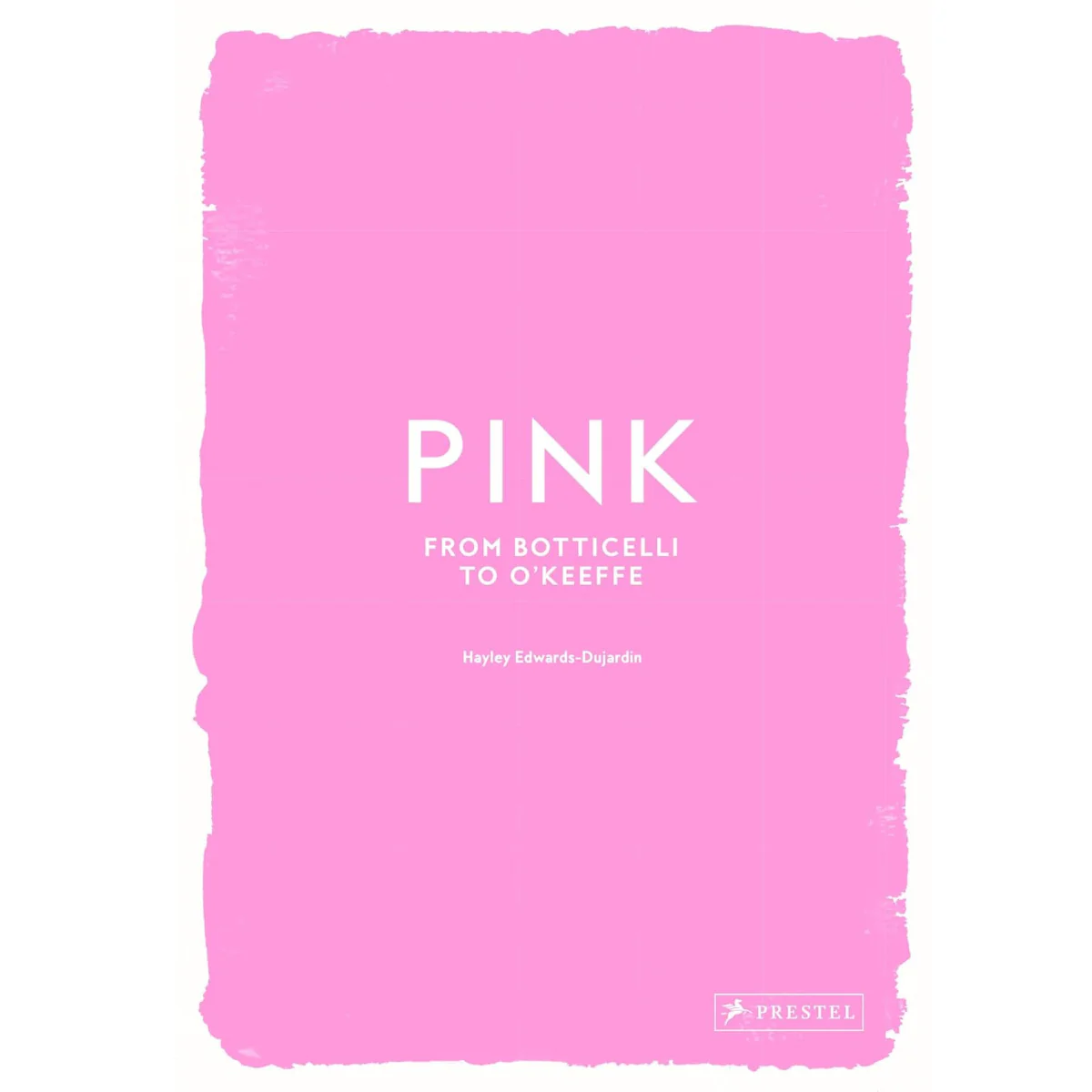
Pink: From Botticelli to O'Keefe
Discover how the color pink evolved from a symbol of innocence and frivolity to a powerful vehicle for artistic play, ambiguity, and subversion.
Long associated with delicacy and sentiment, pink has also been used to express grandeur, sensuality, irony, and rebellion. This richly illustrated volume explores how the meaning and function of pink have changed across cultures and centuries— from Sassetta’s Renaissance saints and Boucher’s idyllic visions to the dreamlike florals of O’Keeffe and the saturated islands of Christo and Jeanne-Claude.
Readers will encounter pink as a mark of divine humility in religious paintings by El Greco and Pontormo; as a signal of luxury and desire in the flirtatious scenes of Fragonard and the refined elegance of Boucher; and as a radical material in modern and contemporary works by Paul Signac, Georgia O’Keeffe, and Takashi Murakami. The book is organized around forty artworks that each feature pink in a striking or significant way.
Arranged loosely in chronological order, each entry pairs a full-page image with a short, insightful essay that reveals how artists used pink—through pigment, and depictions of clothing, light, and flesh—to shape meaning and mood. Throughout, timelines, maps, and sidebars offer cultural context and historical depth, including a vivid chart of historically and poetically named pinks—from cuisse de nymphe and rose bonbon to vieux rose and rose vineux—that reflect the color’s remarkable expressive range.
Visually layered and full of unexpected connections, Pink invites readers to look again at a color too often dismissed—and to see how it has illuminated, disguised, and transformed works of art for centuries.
Hardback, 108 pages
Discover how the color pink evolved from a symbol of innocence and frivolity to a powerful vehicle for artistic play, ambiguity, and subversion.
Long associated with delicacy and sentiment, pink has also been used to express grandeur, sensuality, irony, and rebellion. This richly illustrated volume explores how the meaning and function of pink have changed across cultures and centuries— from Sassetta’s Renaissance saints and Boucher’s idyllic visions to the dreamlike florals of O’Keeffe and the saturated islands of Christo and Jeanne-Claude.
Readers will encounter pink as a mark of divine humility in religious paintings by El Greco and Pontormo; as a signal of luxury and desire in the flirtatious scenes of Fragonard and the refined elegance of Boucher; and as a radical material in modern and contemporary works by Paul Signac, Georgia O’Keeffe, and Takashi Murakami. The book is organized around forty artworks that each feature pink in a striking or significant way.
Arranged loosely in chronological order, each entry pairs a full-page image with a short, insightful essay that reveals how artists used pink—through pigment, and depictions of clothing, light, and flesh—to shape meaning and mood. Throughout, timelines, maps, and sidebars offer cultural context and historical depth, including a vivid chart of historically and poetically named pinks—from cuisse de nymphe and rose bonbon to vieux rose and rose vineux—that reflect the color’s remarkable expressive range.
Visually layered and full of unexpected connections, Pink invites readers to look again at a color too often dismissed—and to see how it has illuminated, disguised, and transformed works of art for centuries.
Hardback, 108 pages
Description
Discover how the color pink evolved from a symbol of innocence and frivolity to a powerful vehicle for artistic play, ambiguity, and subversion.
Long associated with delicacy and sentiment, pink has also been used to express grandeur, sensuality, irony, and rebellion. This richly illustrated volume explores how the meaning and function of pink have changed across cultures and centuries— from Sassetta’s Renaissance saints and Boucher’s idyllic visions to the dreamlike florals of O’Keeffe and the saturated islands of Christo and Jeanne-Claude.
Readers will encounter pink as a mark of divine humility in religious paintings by El Greco and Pontormo; as a signal of luxury and desire in the flirtatious scenes of Fragonard and the refined elegance of Boucher; and as a radical material in modern and contemporary works by Paul Signac, Georgia O’Keeffe, and Takashi Murakami. The book is organized around forty artworks that each feature pink in a striking or significant way.
Arranged loosely in chronological order, each entry pairs a full-page image with a short, insightful essay that reveals how artists used pink—through pigment, and depictions of clothing, light, and flesh—to shape meaning and mood. Throughout, timelines, maps, and sidebars offer cultural context and historical depth, including a vivid chart of historically and poetically named pinks—from cuisse de nymphe and rose bonbon to vieux rose and rose vineux—that reflect the color’s remarkable expressive range.
Visually layered and full of unexpected connections, Pink invites readers to look again at a color too often dismissed—and to see how it has illuminated, disguised, and transformed works of art for centuries.
Hardback, 108 pages